
AFTER FUEL
Reimagining London’s redundant petrol stations as climate infrastructure · Academic project · Kingston University · 2025
How can redundant petrol stations become public landscapes that restore contaminated ground, manage water and reconnect urban habitats? After Fuel explores the future transformation of a petrol station beside the A13 in Barking, London. The project investigates how the transition away from fossil fuels can create opportunities to reimagine obsolete infrastructure as a network of landscapes supporting environmental recovery and everyday life. Phytoremediation planting, layered microforests and rain gardens establish the site’s ecological framework, addressing potential petroleum contamination, surface-water flooding and fragmented habitats. Walking routes, clearings and informal gathering spaces are integrated with this evolving landscape, exploring how soil recovery, ecological succession and public use can develop together through a phased approach.
SITE AND STRATEGY
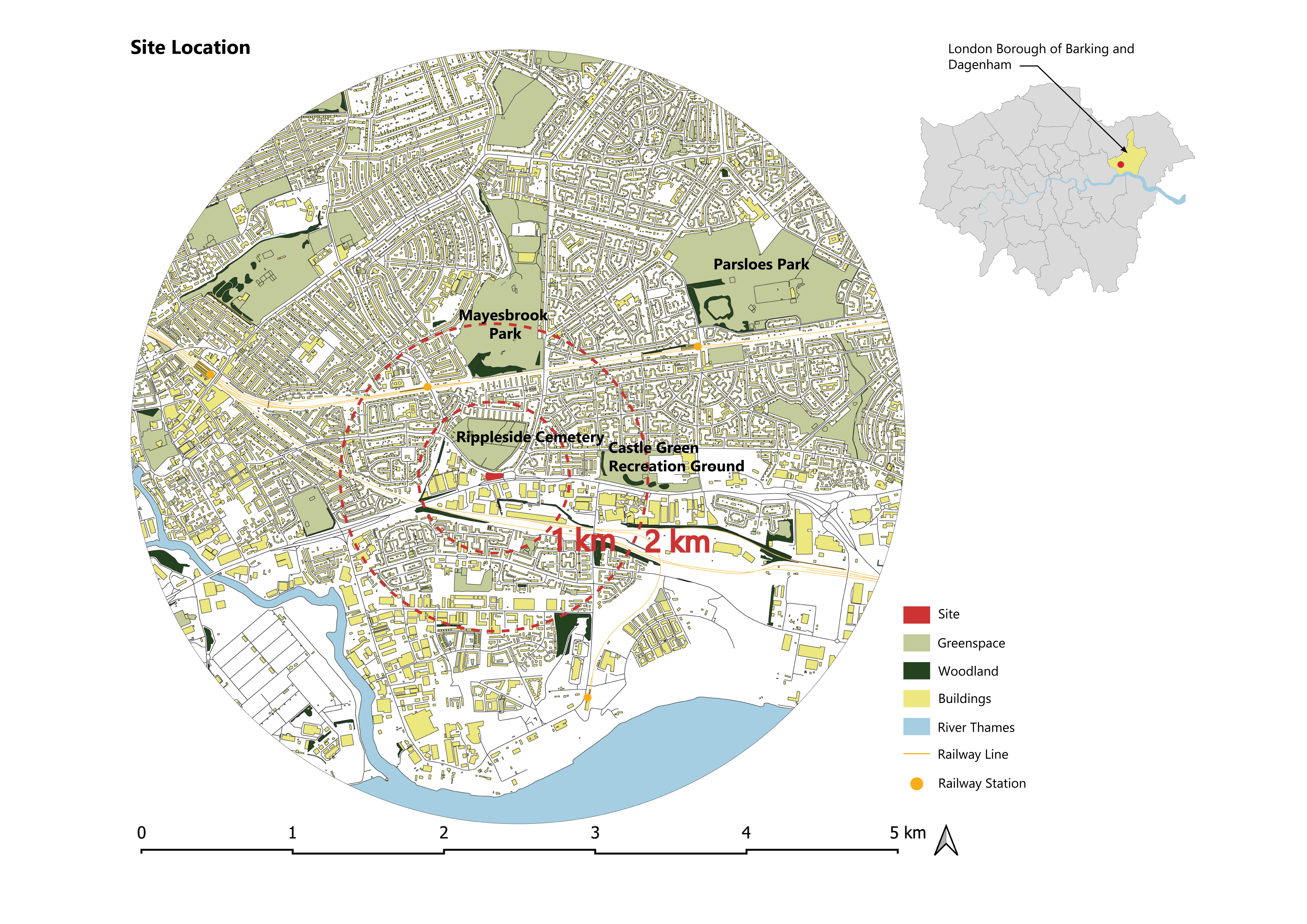
The site lies beside the A13 in Barking, within a wider network of green spaces including Rippleside Cemetery, Castle Green Recreation Ground and Mayesbrook Park. This context offers an opportunity to transform the petrol station into an ecological stepping stone connecting surrounding habitats.
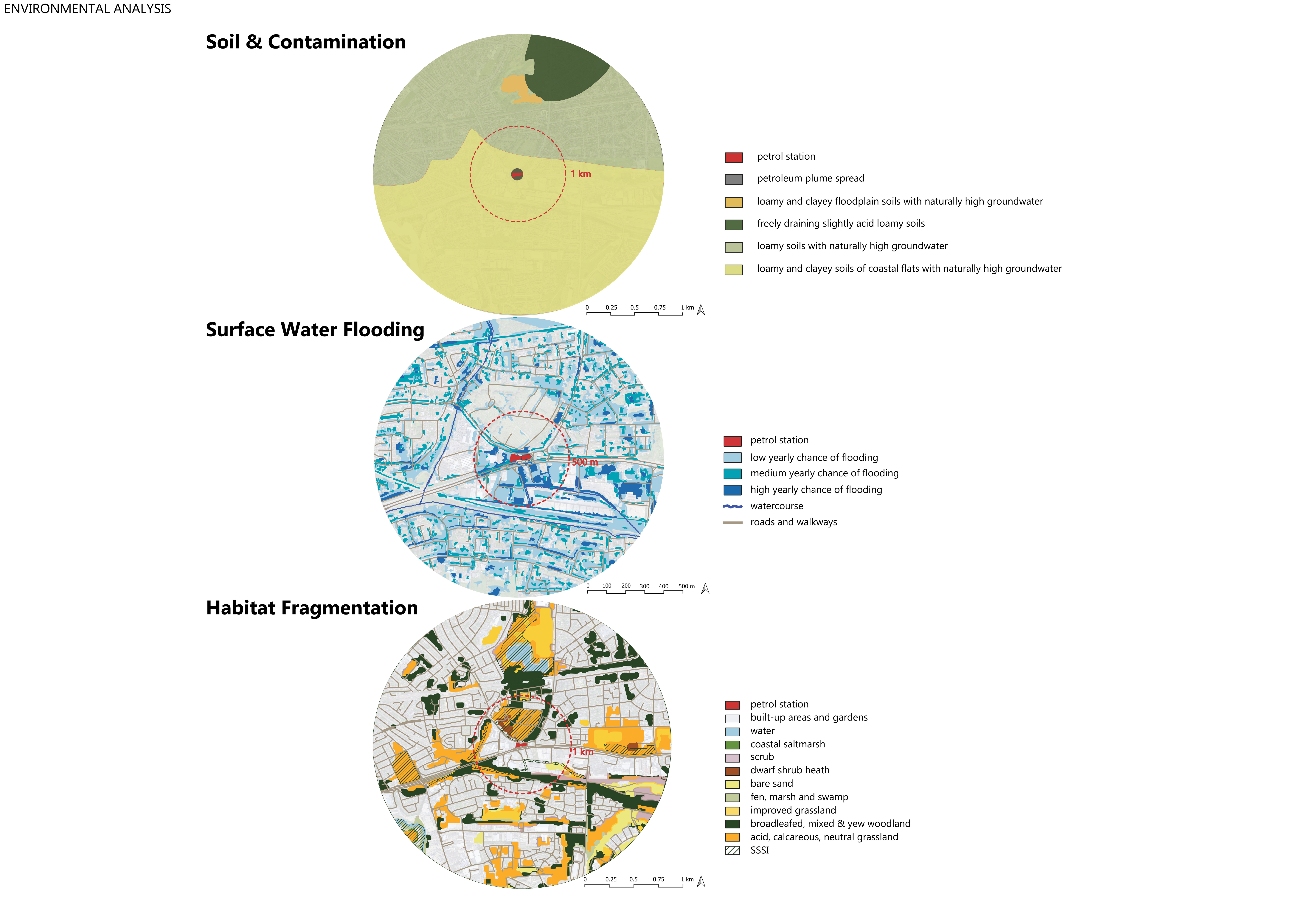
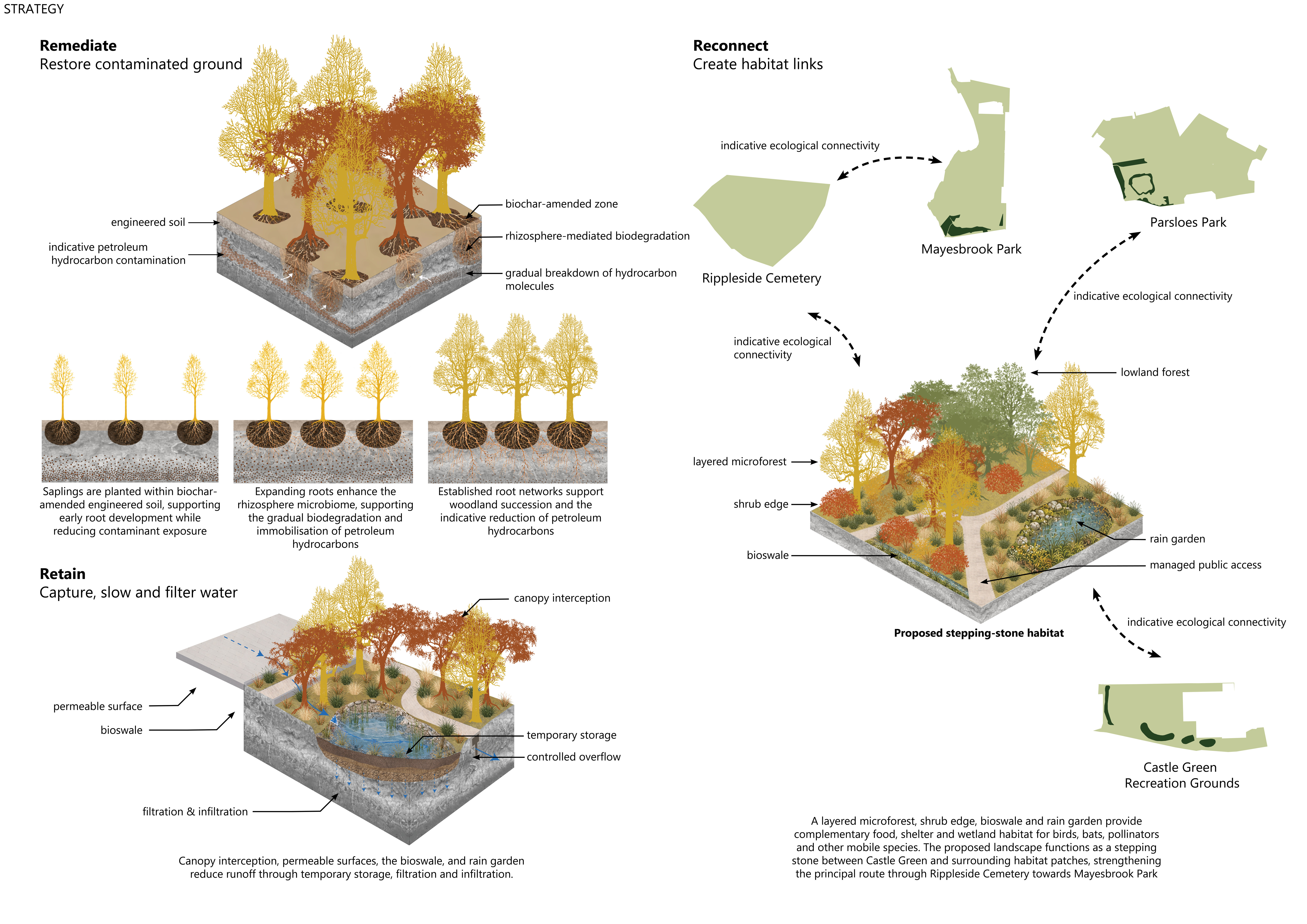
The analysis identifies three interconnected challenges: potential petroleum contamination, surface-water flooding and fragmented habitats. Clay-rich soils and naturally high groundwater may influence the accumulation and movement of petroleum contaminants. The proposal responds with phased phytoremediation planting, supported by engineered soil and biochar within potentially contaminated areas. Extensive impermeable surfaces generate rapid runoff, placing pressure on surrounding drainage and contributing to surface-water flood risk. Removing hard surfacing and introducing rain gardens, vegetated depressions and permeable surfaces would help slow, store and filter this water. The petrol station and adjacent underused green space form a gap between surrounding habitats. A mosaic of microforest, rain garden, and bioswale habitats would create an ecological stepping stone, providing food and shelter for wildlife and strengthening local habitat connections.
MASTERPLAN

